Physiological discovery · reviewed
Circulation of blood
Published in 1628Blood circulates continuously from the heart through arteries and back through veins.
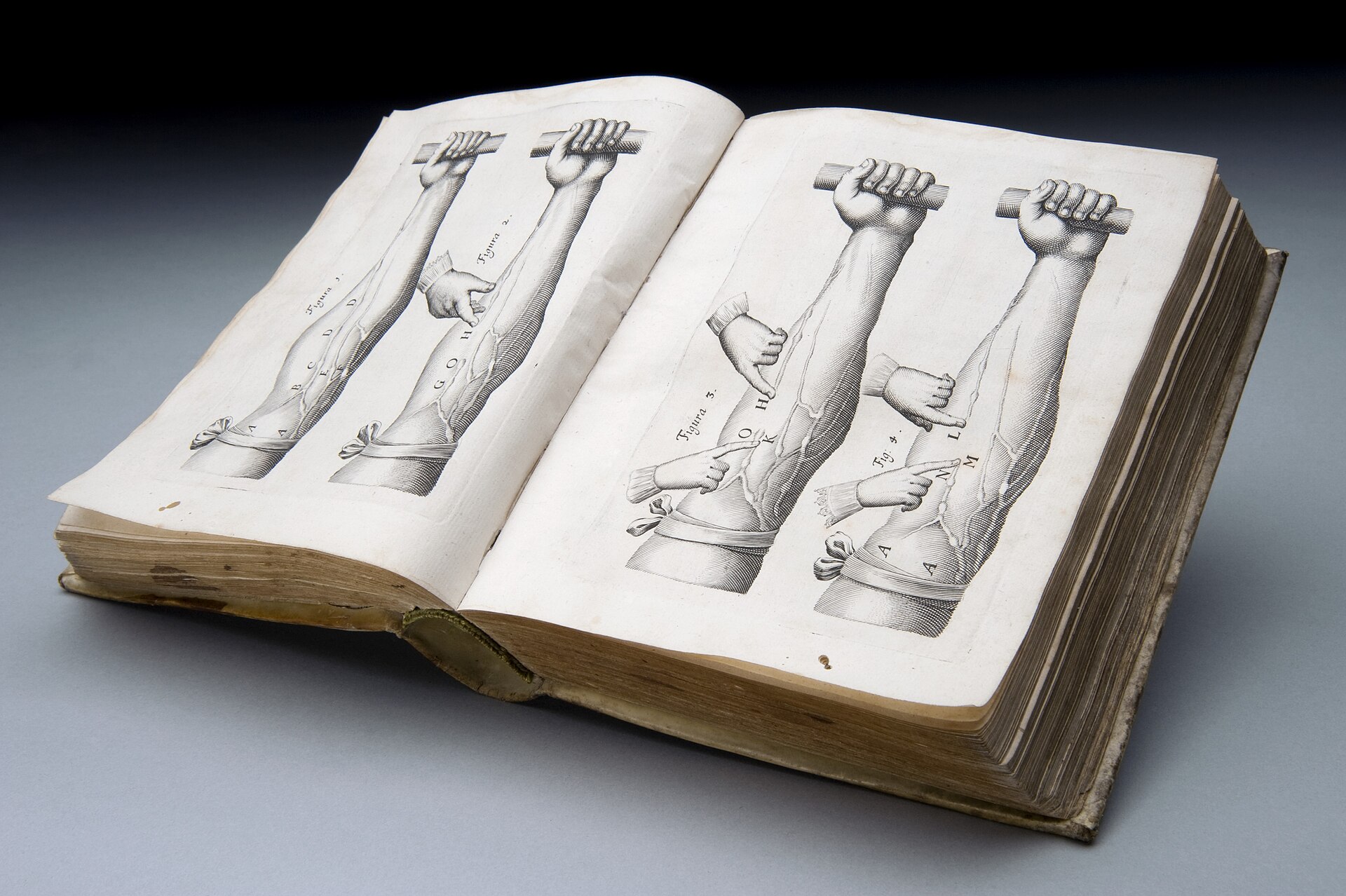
Harvey's 1628 account established a systemic, heart-driven circuit using converging anatomical and experimental evidence. Earlier work on pulmonary transit and venous valves contributed, while capillary connections were observed only later with microscopes. In this model, the heart drives blood through arteries and it returns through veins in a continuous circuit. The idea reorganized physiology around flow, pressure, valves, and cardiac action, creating a foundation for later transfusion, cardiovascular diagnosis, and life-support technologies.
Sources
- William Harvey and the discovery of the circulation of the blood — R. E. Siegel, 2009
- Who discovered the valves in the veins? — Paolo M. F. M. van der Waal et al., 2021
Direct relationships
- Venous valves→Circulation of bloodTheir orientation supplied evidence for one-way venous return · high confidence
- William Harvey→Circulation of bloodPublished an experimental account of systemic circulation · high confidence
- Circulation of blood→Blood transfusionProvided the physiological model required to understand transfusion · medium confidence