Diagnostic instrument · reviewed
Clinical thermoscope
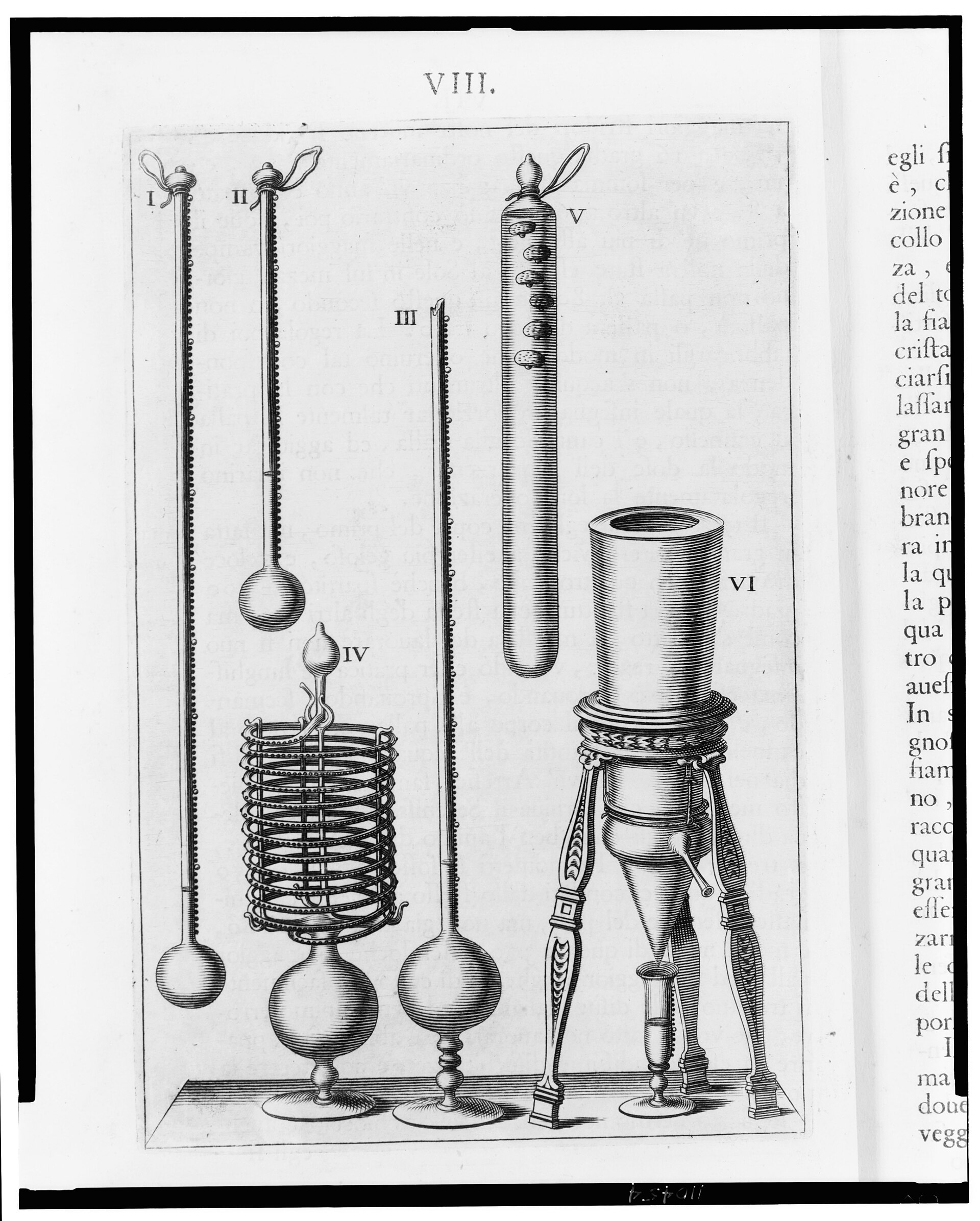
Circa 1612A graduated thermoscope made changes in body temperature more consistently comparable.
Around 1612, Santorio described applying a graduated thermoscope to patients. It lacked the fixed reference points of a modern clinical thermometer, so its readings were relative rather than standardized. Early thermoscopes indicated relative changes rather than modern standardized temperatures. Santorio's use of a graduated scale and timed procedure made repeated comparison more practical, beginning a long transition from subjective assessment of fever toward instrument-based clinical measurement.
Sources
- The forgotten history of thermometer, part I: Santorio Santorio's contribution to the science of thermometry — Fabrizio Bigotti, 2019
- A brief history of the clinical thermometer — R. P. M. G. van der Sijs, 2020
Direct relationships
- Santorio Santorio→Clinical thermoscopeApplied a graduated thermoscope to clinical measurement · high confidence
- Clinical thermoscope→BioelectricityEstablished a lineage of instrumented physiological measurement · low confidence