Scientific discovery · reviewed
DNA structure
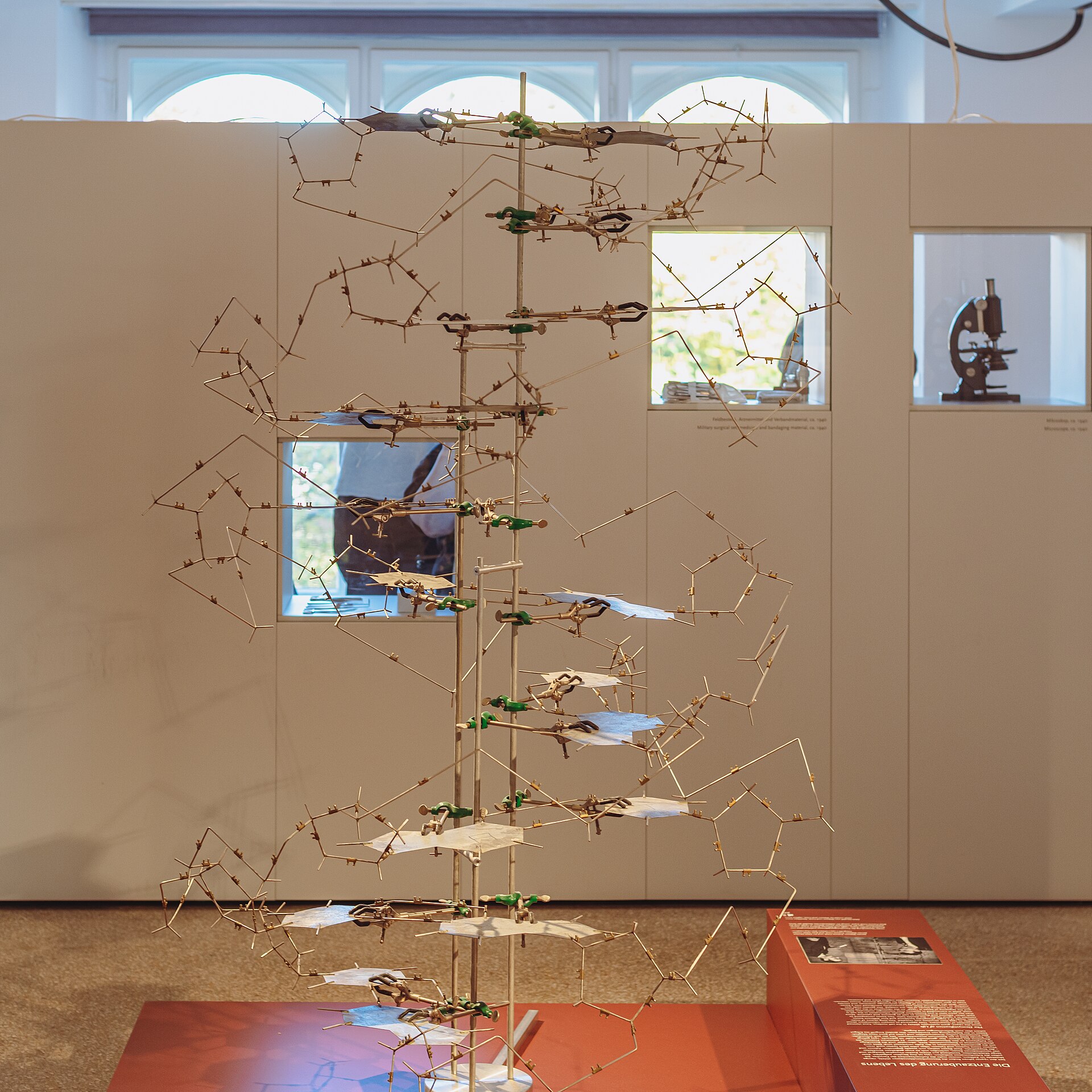
1953The 1953 double-helix model explained how DNA could store and copy genetic information.
Watson and Crick's model relied substantially on X-ray diffraction evidence produced by Rosalind Franklin and Maurice Wilkins, alongside chemical knowledge. Priority and credit should not be reduced to a two-person discovery story. The paired strands suggested a mechanism for copying genetic information because each strand could guide formation of its partner. The model became a foundation for molecular biology, but its history also shows why scientific credit must include experimental evidence, collaboration, and institutional context.
Sources
- Fiftieth Anniversary of Watson and Crick's Description of the Double Helix — National Human Genome Research Institute, 2013
Direct relationships
- Cell theory→DNA structureConnects cellular organization with molecular heredity · low confidence
- DNA structure→Polymerase chain reactionProvided the base-pairing model exploited by selective amplification · high confidence