Clinical technology · reviewed
Magnetic resonance imaging
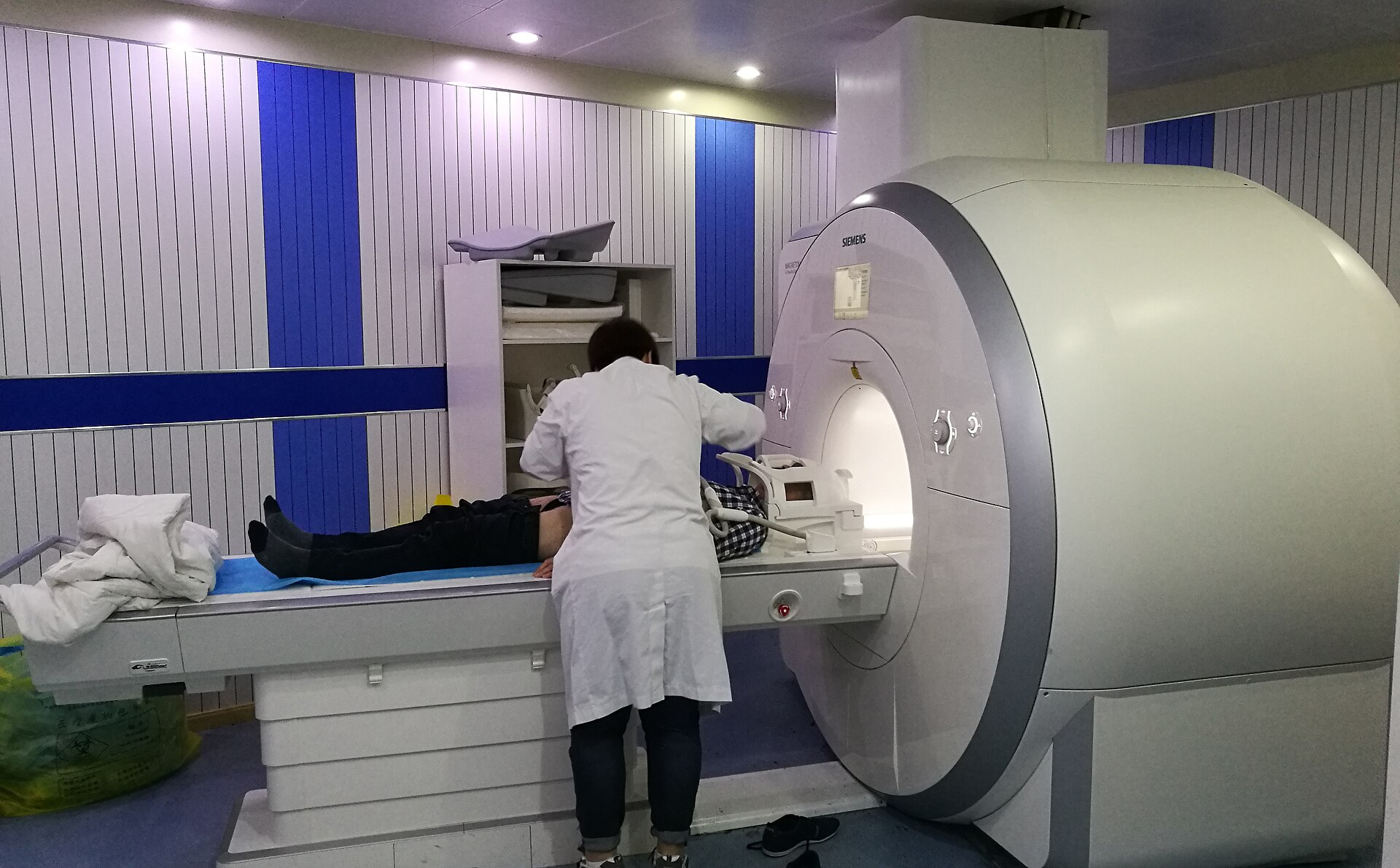
From 1973MRI uses magnetic fields, radiofrequency signals, gradients, and computation to map tissue properties.
Lauterbur demonstrated spatial imaging with magnetic-field gradients in 1973; Mansfield advanced gradient use and rapid signal analysis. MRI developed through many further scientific, engineering, and clinical contributions. Hydrogen nuclei in the body respond to radiofrequency energy while placed in a strong magnetic field. Differences in how tissues release that energy create contrast, allowing MRI to show soft tissues in detail without using ionizing radiation, although scans can be lengthy and require strict magnetic-field safety.
Sources
- The Nobel Prize in Physiology or Medicine 2003: Press release — The Nobel Assembly at Karolinska Institutet, 2003-10-06
- MRI (Magnetic Resonance Imaging) — U.S. Food and Drug Administration, 2025
Direct relationships
- Electromagnetism→Magnetic resonance imagingShares a foundation in controlled magnetic and radiofrequency fields · high confidence
- Semiconductor transistor→Magnetic resonance imagingSupported MRI control, signal processing, and image computation · medium confidence