Laboratory technology · reviewed
Polymerase chain reaction
Conceived in 1983PCR repeatedly copies a selected DNA segment until it is readily detectable and analyzable.
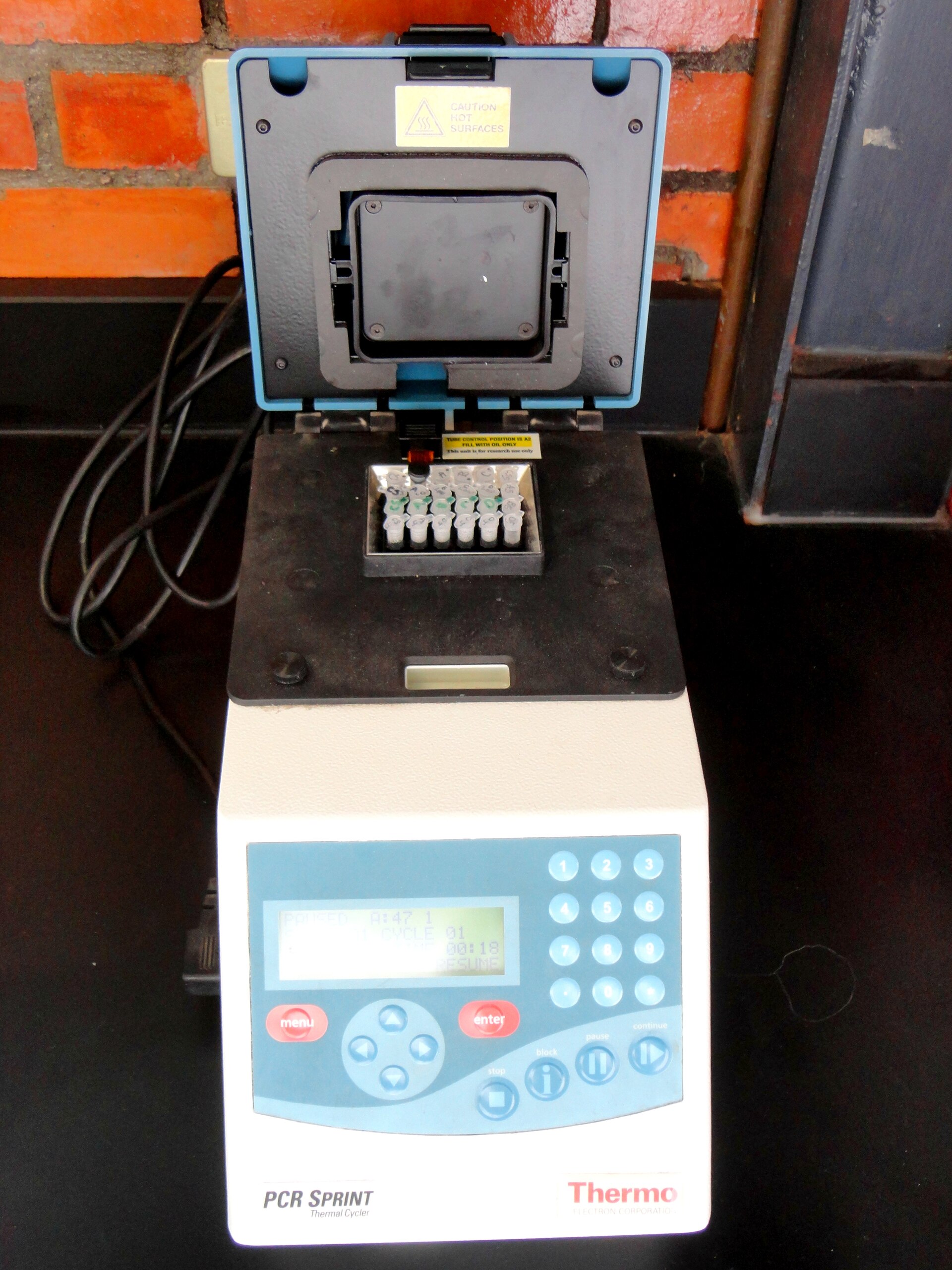
Conceived by Kary Mullis in 1983 and made practical through enzymes, primers, and thermal cycling, PCR became a foundational method in research, pathogen detection, and genetic testing. Each heating and cooling cycle separates DNA, allows short primers to bind, and lets an enzyme copy the target region. Repeating the cycle produces millions of copies, turning a tiny biological sample into material that can be detected and studied.
Sources
- Polymerase Chain Reaction (PCR) Fact Sheet — National Human Genome Research Institute, 2020-08-17
Direct relationships
- DNA structure→Polymerase chain reactionProvided the base-pairing model exploited by selective amplification · high confidence
- Polymerase chain reaction→Molecular diagnosticsMade low-abundance nucleic-acid targets clinically detectable · high confidence