Engineering technology · reviewed
Semiconductor transistor
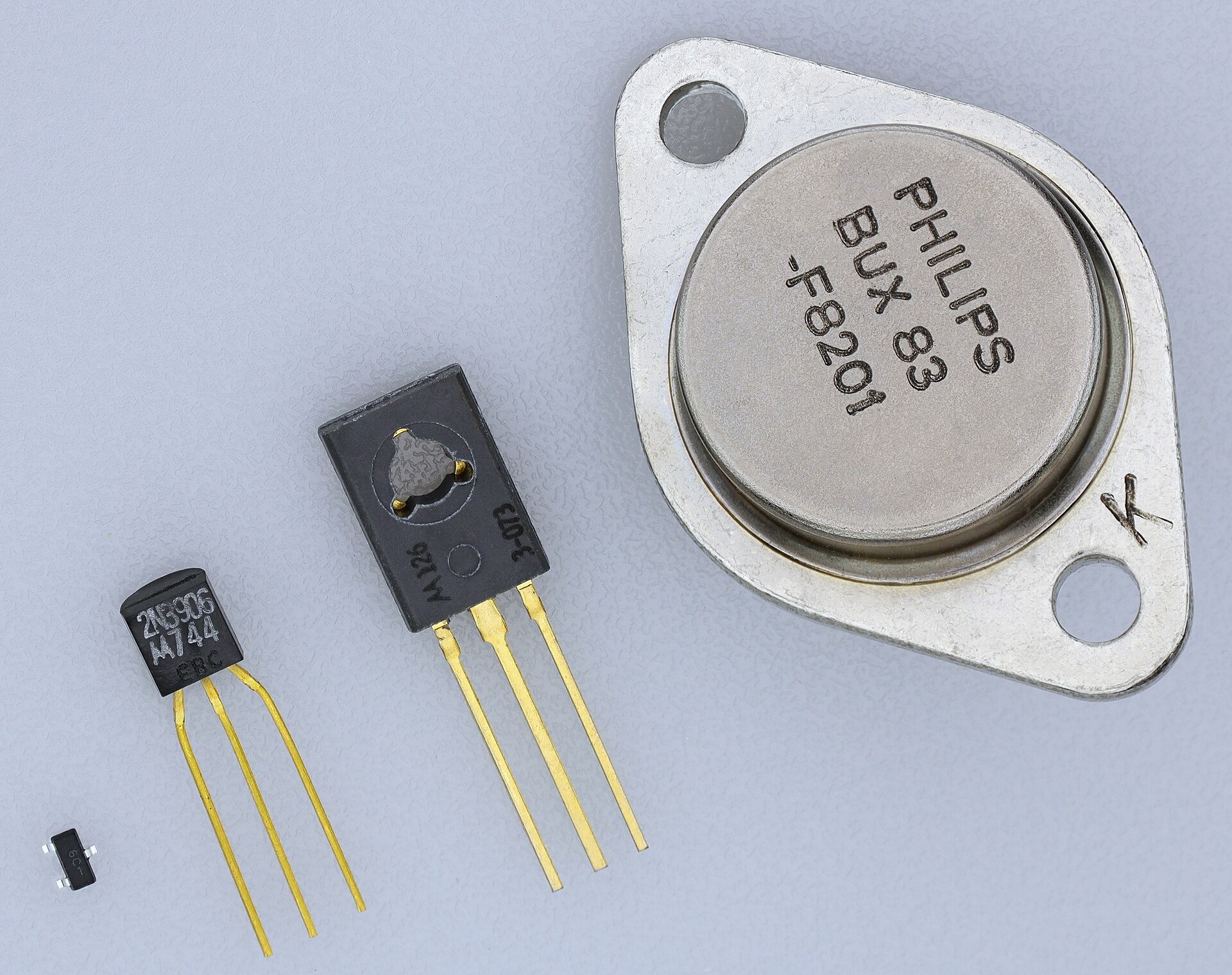
From 1947The transistor provided compact, low-power amplification and switching without heated vacuum tubes.
Bardeen and Brattain demonstrated a point-contact transistor in 1947; Shockley subsequently developed the junction transistor. Transistors enabled increasingly small and reliable medical electronics. Unlike vacuum tubes, transistors were small, durable, and energy-efficient. Their adoption allowed amplifiers, computers, monitors, scanners, and implanted devices to become more reliable and portable, while integrated circuits eventually placed vast numbers of transistors on a single chip.
Sources
- Landmarks: Birth of Modern Electronics — American Physical Society, 2009
Direct relationships
- Semiconductor transistor→Computed tomographySupported the digital electronics and computation required by CT · medium confidence
- Semiconductor transistor→Magnetic resonance imagingSupported MRI control, signal processing, and image computation · medium confidence
- Semiconductor transistor→Medical ultrasoundMade amplification, processing, and compact display systems practical · medium confidence
- Semiconductor transistor→Implantable pacemakerEnabled compact, battery-powered pacing circuits · high confidence