Engineering technology · reviewed
Vacuum tube
From the 1890s; electronic valve patented 1904Vacuum tubes made it possible to direct, rectify, and amplify electron flow.
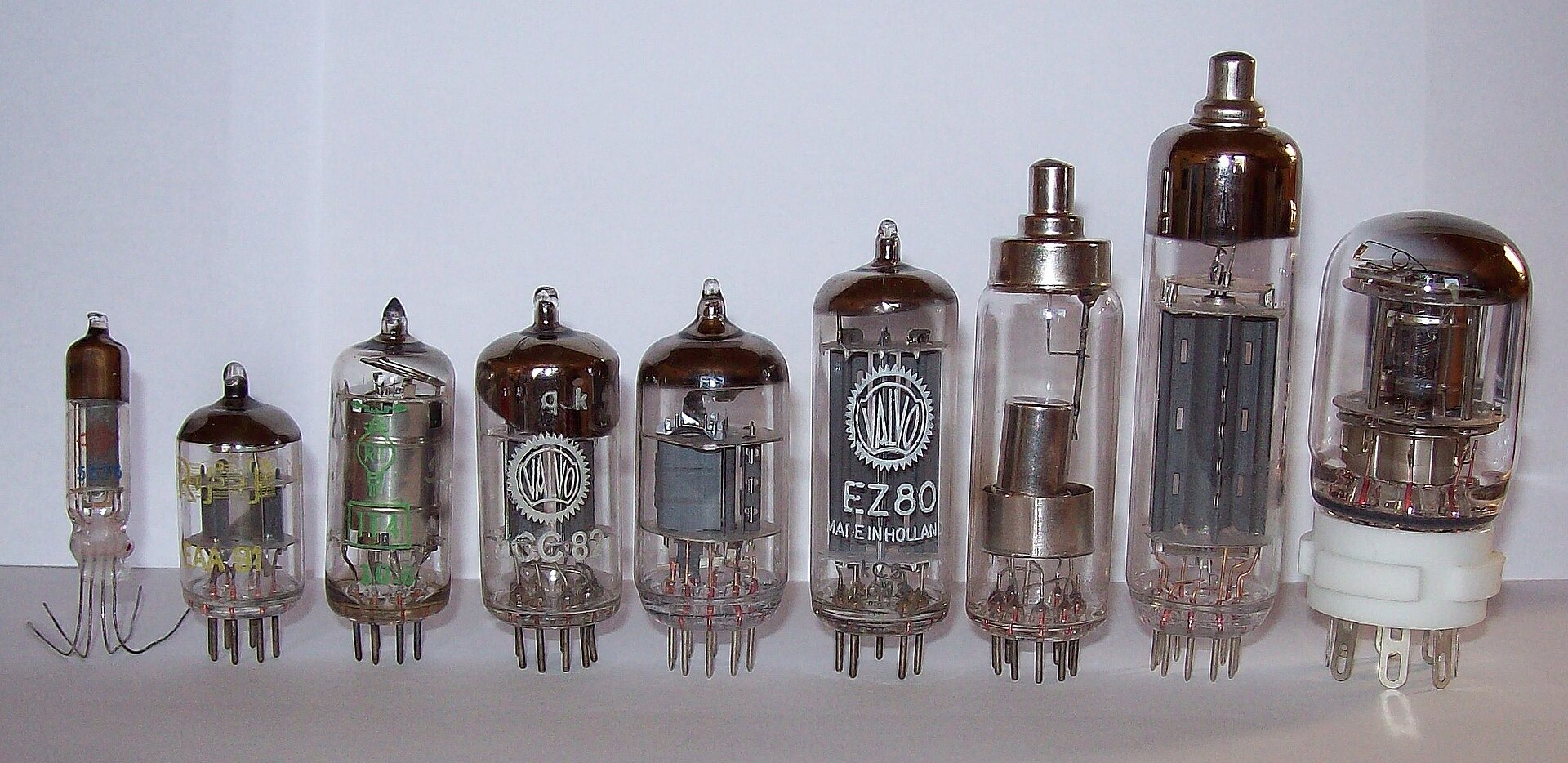
Fleming's 1904 diode and later control-grid tubes became foundational electronic components. Earlier gas-discharge tubes also supplied the apparatus in which Röntgen observed X-rays. Inside a sealed glass tube, electrons could travel through a vacuum and be controlled by electrodes. Different tube designs generated radiation, amplified weak signals, and switched circuits, making the vacuum tube an important bridge between nineteenth-century physics and twentieth-century medical electronics.
Sources
- Nov. 16, 1904: John Ambrose Fleming Patents the Vacuum Tube — Kendra Redmond, 2024-10-15
- Medical Imaging: From Roentgen to the Digital Revolution, and Beyond — Hedvig Hricak et al., 2018
Direct relationships
- Electromagnetism→Vacuum tubeSupplied the electrical principles used to control electron flow · medium confidence
- Vacuum tube→X-raysDischarge tubes provided the apparatus in which X-rays were observed · medium confidence
- Vacuum tube→Electron microscopySupplied vacuum and electron-beam engineering precedents · high confidence
- Vacuum tube→ElectrocardiographyLater enabled electronic amplification of cardiac signals · low confidence