Person · reviewed
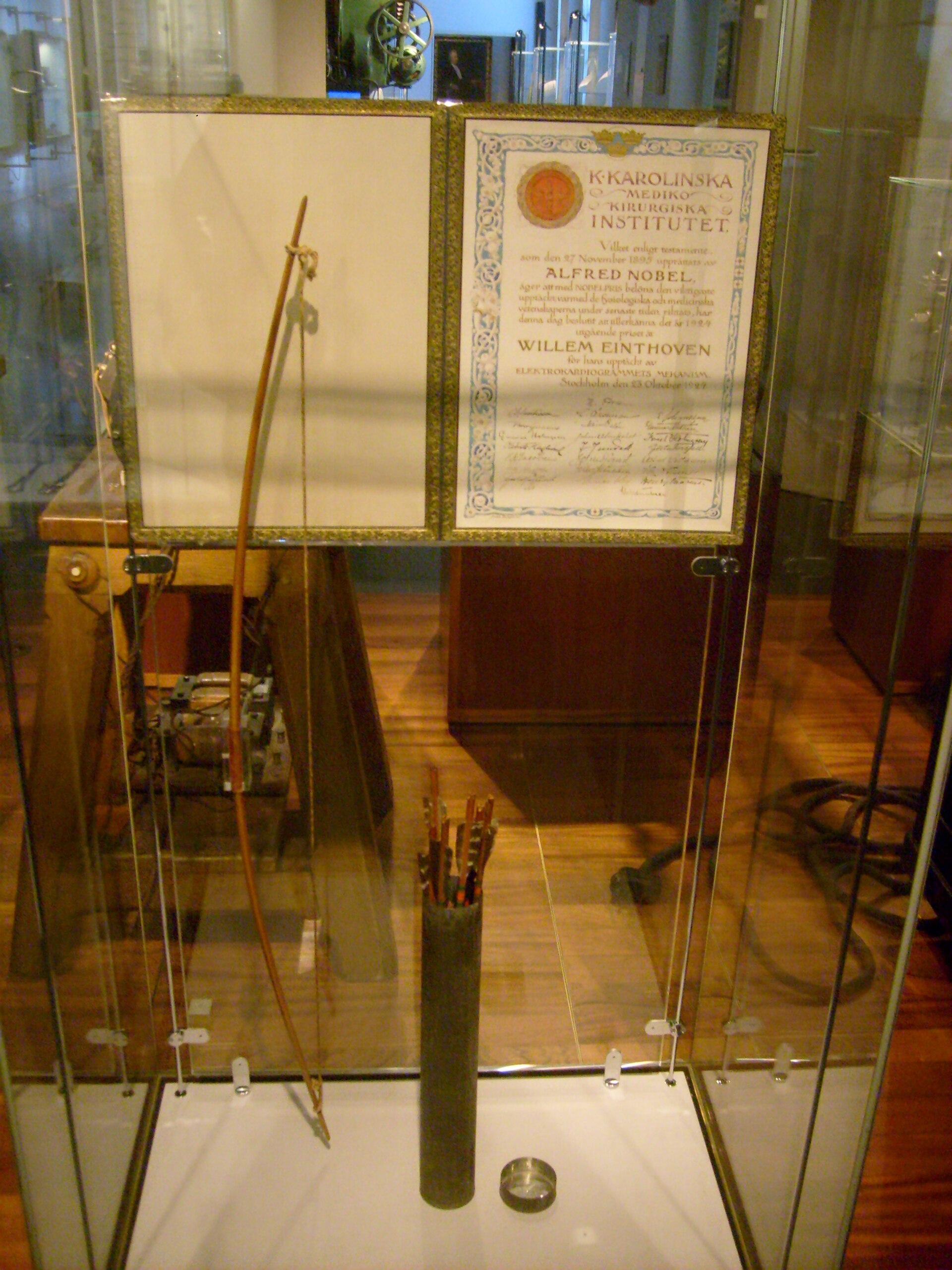
Willem Einthoven
1860–1927Einthoven made cardiac electrical recording accurate enough for systematic clinical study.
He introduced the sensitive string galvanometer in 1903, retained the P–Q–R–S–T notation, developed lead conventions, and demonstrated characteristic electrocardiographic patterns in heart disease. His apparatus used a very fine conductive string moving within a magnetic field to register the heart's electrical activity. The machine was large, but its precision and standardized leads turned an experimental signal into a reproducible clinical record.
Sources
- Physiology or Medicine 1924 – Presentation Speech — Nobel Committee for Physiology or Medicine, 1924
Direct relationships
- Willem Einthoven→ElectrocardiographyMade electrocardiography accurate, standardized, and clinically interpretable · high confidence